
Wednesday January the 7th, 2026
09h00 Opening by Denis Noble & Nathalie Gontier
THEME: Biological Relativity and the Biomedical Sciences
9h15
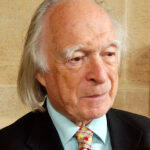
Denis Noble (Onsite)
Biological Relativity and its Implementation in Theories of Evolution
The Principle of Biological Relativity states simply that there is no privileged level of causation in living systems. Rather, there are multiple levels of organisation. We can be sure of that because no solutions to the equations of motion in any system can be solved without knowledge of the boundary conditions. Cells alone form many of those boundary conditions, independent of genomes. So do tissues, organs, and systems of the body. The Principle of Biological Relativity is therefore a logical necessity. The lecture will outline what this must mean for any theory of evolution and why neither neo-Darwinism nor the Modern Synthesis can satisfy those conditions. Those latter theories require (1) That DNA can replicate faithfully like a crystal; (2) That the germline is isolated from the rest of the organism by the Weismann Barrier; (3) That association scores between genes and functionality represent what we can know about causality; and (4) That the Central Dogma of Molecular Biology prevents organisms from editing their genomes. All four of these assumptions are incorrect in ways that invalidate a gene-centric interpretation of evolutionary biology. Organisms are necessarily open systems. Inheritance cannot, therefore, be restricted solely to what is passed down the generations through the genome. That is what opens up many opportunities for future work in evolutionary biology.
Denis Noble is a Physiologist, Systems Biologist, and Philosopher of Evolutionary Biology. His experimental research has focused on the heart. He was responsible for developing the first mathematical models of pacemaker activity, and he also demonstrated that pacemaker processes are formed within multiple interlocking physiological control networks. Individual processes dependent on just one causal gene can therefore replace each other when the protein involved is blocked or its gene knocked out. After retiring from the Chair of Cardiovascular Physiology at Oxford, Noble started working on Evolutionary Biology. He has now published more than 50 books and articles in this field. He is currently the Director of Computational Physiology in the Department of Physiology, Anatomy & Genetics at Oxford and a chairholder at Daegu-Gyeongbuk Institute of Science and Technology, South Korea. He is a Fellow of the Royal Society and a Foreign Member of several other National Academies, as well as the holder of Honorary Doctorates from several universities in the United Kingdom and abroad. His work on the heart won the Lomonosov Grand Gold Medal of the Russian Academy of Sciences in 2022.
10.30am Break
11hr00 - 13hr00


 Benedikt Hallgrímsson (Onsite)
The Polygenic Basis for Mendelian Disease and the Attribution of Cause
Are mutations satisfactory causes of phenotypes or even of differences in phenotypes? This question, with roots in the origins of genetics, revolves around where we separate the relevant from the extraneous in explanations of heritable variation. Genetic diseases associated with specific mutations are routinely attributed to the influence of those mutations on biological systems. Analyses of the genetics of human Mendelian diseases, however, is revealing a more nuanced picture. Many such diseases are associated with effects on complex phenotypic features, including the face. These effects are often similar to the directions of variation present in the background population of individuals who do not have these diseases. The facial shape effects associated with achondroplasia, for example, map to an axis of coordinated variation that is present in the background population and associated with variation in growth at the cartilaginous growth centers of the skull. This axis has a polygenic basis enriched for genes related to cartilage development. Remarkably, the conjoint phenotypic effects of the genes associated with this axis replicate the achondroplasia phenotype without the “causative” Fgfr3 gene, in both mice and humans. Finally, relatives of people with genetic diseases tend to score higher than expected on the disease axis of their proband relative. These findings suggest that the directions of variation associated with genetic diseases often exist independently of causative mutations, which places the explanatory burden on disease-related phenotypes more on the propensities of biological systems to respond to perturbation rather than on the mutations themselves. I explore this issue in terms of what it means to individuate genes as causes of disease, its implications for the developmental genetics of disease, and also in terms of the blurred distinction between discontinuous and continuous variation.
Benedikt Hallgrímsson is Professor and Head of the Department of Cell Biology & Anatomy at the University of Calgary. The central motivating question for his research program is how genetic and environmental influences act on developmental systems to produce anatomical variation. His program uniquely integrates advanced imaging and measurement (morphometrics) with developmental biology to understand the underlying mechanisms for phenotypic variation. His work extends to the mechanisms that underlie structural birth defects, such as craniofacial anomalies, as well as the anatomical aspects of genetic diseases and variation more generally, including differences among individuals in height or facial shape. He is currently the Deputy Director of the Alberta Children's Hospital Research Institutes, and he co-leads the Canada First Research Excellence Program "One Child Every Child," which aims to improve outcomes for child health in Canada. Benedikt Hallgrímsson is a Fellow of the American Association for the Advancement of Science (2018) as well as the Canadian Academy of Health Sciences (2019) and is a winner of the Rohlf Medal for Excellence in Morphometrics (2015). Recent biomedical publications include papers on the development of the face and the craniofacial shape; achondroplasia-like facial variation; and how three-dimensional facial imaging assists in syndrome diagnosis. Evolutionary developmental papers include works on evolvability; phenotypic covariation; and how developmental nonlinearity drives phenotypic robustness.
 Azra Raza (Online)
The Unpredictable Trajectory of Clonal Evolution in Cancer and the Imperative of Early Detection
Despite the common origin of many cancers in a single aberrant cell—the first cell—the downstream trajectory of malignant progression is profoundly individual. Following this initial event, each tumour undergoes clonal evolution shaped by a host of factors: genetic background, immune surveillance, microenvironmental pressures, metabolic states, and therapeutic exposures. These forces interact in non-linear, often chaotic ways, producing unique evolutionary paths for each patient. No two cancers are alike, even if they originate from the same tissue, carry the same mutation, or are diagnosed at the same stage. In this context, the same clonal architecture that leads to indolence in one individual may result in explosive growth in another. This unpredictability parallels the framework of emergent complexity described by Stephen Wolfram. In his work on cellular automata, Wolfram demonstrated that even simple rules applied to uniform starting conditions can produce wildly divergent and irreducibly complex outcomes. Cancer behaves analogously. As such, predicting the future behaviour of a tumor based on its founding mutation is inherently limited, regardless of how sophisticated our molecular profiling tools become. While tailoring treatment to the individual tumour's molecular characteristics is conceptually appealing, the staggering complexity and plasticity of cancer evolution make this approach biologically uncertain and economically unsustainable at the population level. Given these realities, the most rational and humane strategy is to intervene at the earliest stages of clonal evolution, when tumours are still biologically simple, genetically stable, and clinically silent. Early detection—catching the first cell or its earliest clonal progeny—offers the only opportunity to shift the balance decisively in favour of a cure. It is here, before the chaos of complexity unfolds, that cancer can still be a manageable disease.
Azra Raza, MD, is the Chan Soon-Shiong Professor of Medicine and Director of the Edward P. Evans Foundation MDS Centre at Columbia University, USA. A practicing oncologist, she sees 30-40 cancer patients weekly and also directs a cancer research lab. The recipient of three serially endowed chairs and an honorary PhD, Raza has collected over 60,000 longitudinally drawn blood and marrow samples from thousands of her patients with preleukemia and acute myeloid leukaemia. She met with President Biden to plan the Cancer Moonshot and with President Bill Clinton for a 3-day Breakthroughs in Science and Technology Retreat. Describing her groundbreaking ideas in the highly acclaimed, bestselling book, The First Cell and the Human Costs of Pursuing Cancer to the Last, Raza is devoted to shifting the healthcare focus from treatment to early detection and prevention. Raza is the Founder and Director of the Scientific Advisory Board of The First Cell Therapeutics Inc (TFCTx). Raza is the owner of thousands of books in Urdu and English, and co-authored GHALIB: Epistemologies of Elegancen, a book dedicated to the translation and interpretation of poetry. She also runs a YouTube channel which displays about 100 videos on subjects ranging from cancer to poetry. Some recent publications include papers on polyploid giant cells in Leukaemia; giant cells associated with myelodysplastic syndromes. An accessible convocational address on her cancer research is available here.
 Laura Weyrich (Online)
The role of the microbiome in health and disease: insights from ancient DNA studies
Interpreting the evolutionary history of microbial communities within the human body (microbiota) is key to understanding how numerous diseases originate in modern humans. DNA sequencing of preserved dental plaque (calculus) from ancient hominin skeletons now provides a unique opportunity to examine the evolution of microbiota and disease through time. We employed a shotgun sequencing approach to obtain ancient microbial DNA from the dental calculus of European Neandertals and ancient humans from Europe, South America, Asia, and Africa, aiming to reconstruct how these diverse microbial communities have adapted to shifts in lifestyle, diet, and environment over the past 40,000 years and influenced human health. We identified significant shifts in the oral microbiota during the adoption of farming, the Industrial Revolution, and more recently, during the Great Acceleration, revealing how microbial communities respond to changes in diet and environment worldwide. For example, we observe significant shifts in microbiota associated with meat, carbohydrate (sugar), and milk consumption over time in different environments, revealing the loss and replacement of certain microbial species and communities within the mouth. Together, these data provide the first record of human microbiota evolution in real-time and a means to understand why certain bacterial communities are now associated with disease in the modern world. This research also enables us to think broadly about the applications of this work in developing new therapies that prevent dental decay and periodontal disease in the future.
Dr. Weyrich is a Microbiologist, Anthropologist, and Ethicist who uses evolutionary theories to develop novel health therapeutics. She is an Associate Professor of Anthropology and Bioethics at Pennsylvania State University and is the Director of the Penn State Ancient Biomolecules Research Environment. She also holds an adjunct appointment in the School of Biological Sciences at the University of Adelaide. She led the first team to reconstruct the Neandertal oral microbiome, and she is also the CEO and Founder of Microversal LLC, a company developing Oral Microbiome Transplants – leveraging health histories from the past to improve our health tomorrow.
13hr00 Lunch
THEME: Epigenetics and Directed Evolution of Complex Systems
14hr30
 Raju Pookottil (Onsite)
BEEM: Biological Emergence-based Evolutionary Mechanism: How Species Direct Their Own Evolution
Building upon cell intelligence and multicellular intelligence, the hypothesis I propose, BEEM: Biological Emergence-based Evolutionary Mechanism, examines how organisms may direct their own evolutionary trajectories and how natural selection may not be the primary driver of adaptive evolution. Instead, organisms can meaningfully assess the challenges they encounter, design clever solutions, and incorporate them into future generations, essentially circumventing the need to depend on random variations or selection. The BEEM hypothesis examines various phenomena, including cell intelligence, phenotypic plasticity, genetics, and epigenetics, to support these arguments. To understand the evolutionary origins of intelligence, we must ask fundamental questions, such as how agents engage in complex interactions with meaningful outcomes. Ants, for example, are the agents in an ant colony, while complex protein molecules take up that role in cells. In multicellular organisms, the millions of cells are the agents, and their interactions give rise to practical functions and solutions. Emergence, swarm intelligence, or complex systems can help us describe these agential processes. In the BEEM approaches, genes are understood as organismal tools rather than causal agents themselves. Mechanisms and processes exist that enable the organism to control its genes, their activation, use, and mutations. Mutations are often not random, and when accidental mutations do occur, they are mostly corrected back to a functional state within a few generations. This could explain why some species, known as living fossils, have managed to remain relatively unchanged for over millions of years.
Raju Pookottil is an Engineer and Science Enthusiast who operates several firms in London. He received his Bachelor of Engineering from the University of Calicut in India and an MBA from the University of Lincoln, USA. His earlier business endeavours involved building carbon fibre propellers and other mechanical components for ultralight aircraft. For the past 20 years, Pookottil has turned to the evolutionary sciences, where he has been developing a new hypothesis of how evolution might be an organism-directed process, working independently of natural selection. Dissatisfied with the explanations offered by the Modern Synthesis on how complex traits evolve in organisms, he began exploring the fundamentals of swarm intelligence and from there investigated intelligence in cellular and multicellular systems. He then attempted to connect these concepts with modern understandings of genetics, epigenetics, and other hereditary mechanisms. Pookottil is one of the founding members of The Third Way of Evolution, which he initiated in 2014 along with James Shapiro and Denis Noble. He is a self-taught evolutionary scholar and an innovator by nature, and his core strength lies in bringing disparate pieces of information together and using them to introduce entirely novel concepts. His book on the B.E.E.M theory was reviewed by the Royal Society of Biology.
15hr45 break
16hr15- 18hr15
 John Mattick (Onsite)
Kuhnian Revolutions in Molecular Biology and Evolution
In his 1962 book The Structure of Scientific Revolutions, Thomas Kuhn described the progress of science as comprising occasional paradigm shifts separated by interludes of normal science, during which investigations are designed and results interpreted within the reigning conceptual framework, until anomalies accumulate and an adequate replacement is formulated. The conceptual framework that has held sway since the inception of molecular biology is that genes are synonymous with proteins, and that all cellular functions, including the control of gene expression, are performed by proteins, tacitly assuming that the mechanisms that regulate microbial physiology are sufficient to orchestrate human development. Many anomalies have accumulated: only 1% of the human genome encodes proteins; genes-in-pieces; transposon-derived repetitive sequences; the lack of scaling of protein-coding genes and the concomitant increase in noncoding sequences with developmental complexity; a plethora of noncoding RNAs expressed in cell-specific patterns; an epigenome; and a million genetic loci termed enhancers that control the spatiotemporal patterns of development. There is a new understanding: Most genes in humans and other complex organisms encode regulatory RNAs that orchestrate the trillions of cell fate decisions that must be made with high precision, and are the primary substrate of adaptive evolution. The long-standing assumptions in evolutionary theory have been that mutations are random and that experience is not communicated to subsequent generations. Both assumptions are demonstrably incorrect, as non-random mutation and epigenetic inheritance have been well-documented in both plants and animals. The underlying issue, as articulated by Downey and Fellows, is that random searches are intractable in complex systems; therefore, evolution must have discovered ways to improve evolvability, especially in mammals, which have long generation times and limited progeny. It is clear there must be an interplay between hard-wired DNA and RNA-directed epigenetic inheritance. Evidence also suggests that the controlled use of transposable elements enhances adaptive exploration. The current challenge is to formulate a cohesive conceptual framework for understanding evolution and evolvability.
John Mattick is a Molecular Biologist and the Professor of RNA Biology at the University of New South Wales in Sydney. He was previously Chief Executive of Genomics England, Director of the Garvan Institute of Medical Research, and Foundation Director of the Institute for Molecular Bioscience at the University of Queensland. Mattick has pioneered a new understanding of the role of noncoding RNA in the differentiation and development of humans and other complex organisms. He has published over 300 scientific articles, which have been cited over 100,000 times, and is currently ranked the #1 scholar globally in noncoding RNA and #4 in RNA. He is an elected Fellow of the Australian Academy of Science, the Australian Academy of Technology and Engineering, and the Australian Academy of Health and Medical Sciences. His honours and awards include Honorary Fellowship of the Royal College of Pathologists of Australasia, Associate Membership of the European Molecular Biology Organization, the inaugural Gutenberg Professorship of the University of Strasbourg, the International Union of Biochemistry and Molecular Biology Medal, the University of Texas Bertner Award for Distinguished Contributions to Cancer Research, and the Human Genome Organization Chen Medal for Distinguished Achievement in Human Genetics and Genomic Research. His current research is focused on the role of RNA in cognitive processes, and he is currently writing a book entitled The Evolution of Intelligence. Recent works include papers on the Kuhnian revolution in molecular; Long noncoding RNAs; and enhancers that express organizational RNAs.
 Abir U. (Andrei) Igamberdiev (Online)
Evolutionary Complexification as a Generation and Novel Interpretation of Coding Systems in the Process of Natural Computation
I propose a novel approach to understanding the evolutionary process that goes beyond the Extended Evolutionary Synthesis. In this approach, the phenomenon of evolutionary complexification corresponds to the generation of new coding systems defined as Codepoiesis. The entire process of generating novel coding statements that substantiate organizational complexity leads to an expansion of the system, incorporating externality to support newly generated complex structures. During the complexifying evolution, values are assigned to previously unproven statements by encoding them using new codes or rearranging existing ones. In this perspective, living systems during evolution continuously realize the proof of Gödel's theorem. In the real physical world, this realization is grounded in the irreversible reduction of fundamental uncertainty that appears in the self-referential process of internal measurement performed by living systems. This leads to the formation of a sequence of reflexive loops that establish novel interrelations between the biosystem and the external world, providing a possibility for active, anticipatory transformation of externality. In this concept of complexifying evolution, we propose a metamathematical framework that accounts for the underlying logic of Codepoiesis, outline the basic principles of the generation of new coding systems, and describe the main codepoietic events in the course of progressive biological evolution. Evolutionary complexification represents a metasystem transition that results in the system increasing its external work through the division of labour among its components. This approach provides the conceptual basis for further development of the extended evolutionary synthesis by clarifying its metamathematical foundation, with essential consequences for understanding metabolic closure and morphogenesis. It aims to unite alternative approaches and explore new possibilities for future research in the fields of evolutionary biology, the origin of life, and consciousness.
Abir (Andrei) Igamberdiev is a Russian-Canadian Theoretical Biologist and Plant Scientist. He is a Professor at Memorial University of Newfoundland, Canada. His research is centred on the organization of plant metabolism, on the conceptual development of the foundations of theoretical biology and evolutionary theory, and the history and philosophy of science. He was born in Almaty (Kazakhstan) and lived in Voronezh (Russia), where he studied biology at Voronezh State University. He earned a PhD in biology from the same university and a Doctor of Science degree at the Institute of Plant Physiology of the Russian Academy of Sciences in Moscow. He has held visiting scholarships at Umeå University (Sweden), Free University of Berlin (Germany), University of Wyoming (USA), and Risø National Laboratory (Denmark). Afterwards, he permanently moved to Canada, where he worked at the University of Manitoba (Winnipeg) and then at the Memorial University of Newfoundland (St. John's, Newfoundland), where he is currently a Professor at the Department of Biology. He has published over 300 peer-reviewed journal publications and several books. He is currently editor-in-chief of the Elsevier journal BioSystems and a subject editor of the Journal of Plant Physiology. His research focuses on the organization and evolution of metabolism, the development of code systems during eukaryogenesis, the evolution of meaningful information in the biosphere, the human-driven cultivation of pants, the bioenergetics of plant cells, enzymology, adaptation to hypoxic stress, nitric oxide metabolism in plants, the foundations of theoretical biology and evolutionary theory , and the dynamics of biological and social systems.
David Obon (Onsite)
 Creative Overcome Theory: A Systems-Theoretical Approach to How Innovation Drives Evolution
For decades, scientific orthodoxy has expanded the explanatory capacity of the Modern Synthesis—the still-dominant theoretical framework. Despite constant refinements and some reductionist missteps, these efforts still fail to provide satisfactory explanations for some of the most fundamental questions. What gives life to inert matter? How does the overwhelming complexity of life appear? How do purpose and intelligence arise? The Modern Synthesis is far from providing a satisfactory explanation, and such is not a trivial issue for an appropriate theory of life. As the conceptual limitations of the current model have become increasingly evident, valuable theoretical contributions have been made, all of which point in the same direction: innovation. Building on these contributions, this talk presents a systems-theoretical approach that sheds light on these fundamental questions. In this approach, evolution is not a passive, accidental phenomenon, but an active process driven by organic systems searching for new adaptive properties. This active dynamic should not be sought in a mysterious force, but in the capacity of organic systems to generate adaptive novelty. Life emerges, persists, and evolves because it actively seeks innovation, and innovation is a product of selection. This exploratory capacity enables living matter to learn and innovate more efficiently over time, a process accelerated by the positive selection of the most effective exploratory strategies, which I refer to as the Creative Overcome Theory. Creativity is the hallmark of life because living matter is matter that actively and permanently seeks novelty. To achieve it, life fosters systems of innovation at different levels of organic complexity. Innovation is based on specific physical, biological, and cultural devices, and these mechanisms underlie some of the major transitions in evolution. If correct, this interpretation could not only allow for a much more consilient explanation of evolutionary phenomena, but also offer the opportunity to set up a better theoretical framework capable of unifying cosmic, biological, and cultural evolution.
David Obon is a Science Writer, Systems Theorist, and Interdisciplinary Researcher from Barcelona. He holds a PhD from the Polytechnic University of Catalonia. Since completing his thesis, The Architecture of Complexity: Foundations of the Transdisciplinary Method, he has continued his research in search of new theoretical frameworks of broader explanatory power. With a background spanning design, biology, and philosophy of science, he has spent much of his career challenging reductionist frameworks that dominate traditional evolutionary theory. This wide-ranging research has been published in different media and has led him to teach and give lectures at diverse international universities. Obon advocates for a consilient and transdisciplinary approach that connects the fundamental branches of science in the pursuit of a unified theory of evolution. His work encourages us not only to rethink how life and evolution works, but also to consider how humanity can innovate more responsibly in a world where the inexorable increase in complexity pushes us towards an accelerated and uncertain future. Obon is the author of Evolution: The Invention of Creativity, where he argues that evolution is not a passive process driven solely by random mutations and natural selection, as postulated by the current Modern Synthesis, but an active process powered by the capacity of living systems to generate novelty. He also wrote a Spanish book on emergence and complexity.
On Wednesday evening, there will be an Evening Lecture by Blaise Agüera y Arcas starting at 21h00.
 Blaise Agüera y Arcas (Onsite)
A Cooperative, Computational Theory of Evolution
In the 20th century, evolution was assumed to be driven by random mutation and selection for fitness. In more recent years, this neo-Darwinian synthesis has been extended, but many questions remain open, including: How did life begin? Does it really become more complex over time? And how should life even be defined? Drawing on artificial life experiments, this talk introduces a computational definition of life, connecting it with statistical physics, information theory, the theory of computing, and neuroscience, while allowing the definition to encompass the possibility of life on other planets or based on other substrates, whether physical or digital. This work also builds upon the pioneering work on symbiogenesis—the cooperation and combination of pre-existing entities into new ones—advanced by Lynn Margulis, later expanded upon by John Maynard Smith and Eörs Szathmáry. Rather than giving rise only to major transitions, however, symbiogenesis is proposed to play a starring role in evolution, operating constantly and at all scales; indeed, even "successful" point mutations can be understood as minimal symbiogenetic events. This framework offers new insights into life's origins and the ‘arrow of time’ in evolution. Finally, connections are made to recent work in multi-agent reinforcement learning, illustrating why even initially selfish agents are ultimately driven to cooperate, promoting symbiogenesis and the scaling up of parallel computation that has led to multicellular organisms, brains, civilizations, and even AI.
Blaise Agüera y Arcas is a Vice President and Fellow at Google, where he serves as the Chief Technology Officer of Technology & Society. He is the founder of Paradigms of Intelligence, an organization conducting fundamental research in AI and related fields, particularly in the foundations of neural computing, active inference, sociality, evolution, and Artificial Life. In 2008, Blaise was awarded MIT’s Innovators under 35 prize. During his tenure at Google, Blaise has innovated on-device machine learning for Android and Pixel; invented Federated Learning that decentralizes model training avoiding sharing of private data; and founded the Artists + Machine Intelligence program. A frequent public speaker, he has given multiple TED talks and keynoted the Annual Conference on Neural Information Processing Systems. He has authored numerous papers, essays, op-eds, and chapters on the relation between AI and art, physiognomy, sexual orientation, language, existential risk, and human intelligence, as well as several books, including Who Are We Now? and Ubi Sunt. His most recent book, What Is Life?, is part one of the larger book What Is Intelligence?, forthcoming from Antikythera and the MIT Press in September 2025.